
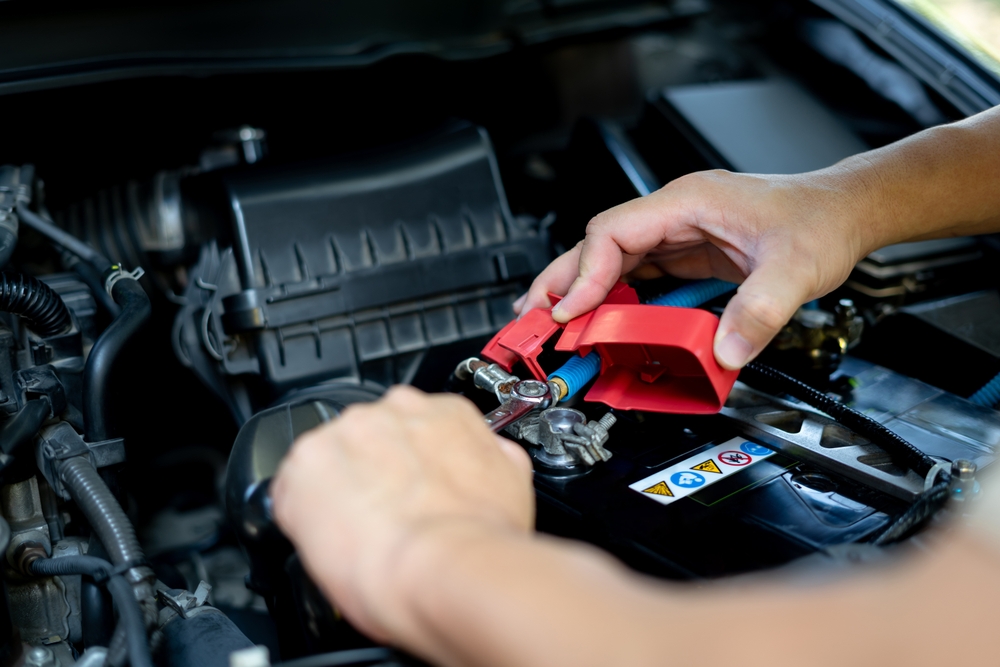
A car that won’t start can often point to a problem in the starting or charging system. Many drivers assume the battery is the cause. In reality, the fault may sit with the alternator, starter motor, or another electrical issue.
This sort of fault usually needs a proper inspection. A new battery can mask the problem for a week or two, then leave you stranded again. Understanding the difference can help you avoid unnecessary parts replacement and get the problem diagnosed properly from the start.
Quick Signs: Battery, Alternator Or Starter
| Symptom | Most Likely Area To Test |
| Slow crank, especially first start of the day | Weak or ageing battery |
| Rapid clicking from the dash or engine bay | Flat battery, weak battery, or loose connection |
| Battery warning light while driving | Alternator or charging system |
| Starts after charging, then goes flat again | Alternator, battery condition, or parasitic drain |
| One solid click with no engine crank | Starter motor, cable, or earth connection |
| Lights and radio work, engine doesn’t turn over | Starter circuit or wiring fault |
Why Cold Mornings Bring These Problems To The Surface
Cold weather puts extra strain on the starting system. Batteries lose some of their punch when temperatures drop, engine oil is thicker first thing in the morning, and the starter motor has to work harder to get everything moving.
That’s why winter often exposes a weakness that’s been building for months. A battery that handled summer without complaint can suddenly struggle. An alternator that’s charging poorly may not top the battery up properly after short local trips.
If your car only seems unhappy first thing in the morning, that’s useful information. It points the diagnosis in the right direction.
Signs That Point To A Battery Problem
A weak battery usually gives a few clues before it gives up completely. The most common sign is slow cranking. You turn the key and the engine sounds like it’s dragging itself into life. Another classic sign is a rapid clicking noise with no start. You may also notice dim headlights, a weak cabin fan, or power windows that move more slowly than usual.
Battery age matters too. If the unit is several years old and the car has started needing the occasional jump-start, the battery is a fair suspect. The same goes for cars that do lots of short trips around town. That kind of driving often doesn’t give the charging system enough time to fully replenish the battery, especially through winter.
A flat battery can also follow something simple, like leaving an interior light on overnight. That said, if the battery goes flat again soon after being charged or replaced, there’s usually a second fault in the background.
Signs That Point To An Alternator Problem
The alternator’s job is to keep the battery charged while the engine is running. When it starts to fail, the symptoms change. A common pattern goes like this: the car gets jump-started, runs for a while, then struggles again later the same day or the next morning. That tells you the battery may not be receiving the charge it needs once the engine is running.
You might also see the battery warning light on the dashboard. Headlights can look dull at idle and brighten when you rev the engine. The radio may cut out, the air conditioning fan may behave oddly, or the dash may flicker. Some drivers notice the car feels normal for ten minutes, then a series of warning lights show up once the battery charge drops away.
When the alternator is the problem, replacing the battery doesn’t solve much. The fresh battery starts the car a few times, then it ends up in the same drained state as the old one.
Signs The Starter Motor May Be Involved
A faulty starter motor often gives you one solid click and nothing more. The dashboard lights may still appear normal. The radio may still work. The battery can even test fine. What’s missing is the starter’s ability to turn the engine over.
Starter issues can also be intermittent. One morning the car fires up after the second turn of the key. The next morning it does nothing. Then it behaves again for a week. That stop-start pattern can make people suspect the battery because the fault feels random.
If the lights stay bright and the engine doesn’t turn at all, the starter motor moves higher up the suspect list.
Understanding The Symptoms
There’s no perfect driveway diagnosis, though a few patterns can help:
- Battery problems often show up as slow cranking, repeated jump-starts, and dim lights before or during start-up.
- Alternator problems often show up after the car has started, with a battery light on the dash, electrical glitches, or a battery that keeps going flat.
- Starter motor problems often show up as a single click, no crank, and normal-looking dash lights.
It’s also worth remembering that bad terminals, corroded connections, and damaged wiring can muddy the picture. That’s why two cars with the same symptom can end up needing very different repairs.
Replacing The Battery Can Miss The Real Fault
A battery is easy to blame because it’s the most visible part of the starting system. It’s also the part many drivers have replaced before. So when the car won’t start, the battery becomes the first thought.
That approach can work once. It doesn’t hold up well when the alternator is undercharging, the starter is drawing too much current, or a connection is loose and heating up under load.
A good example is the driver who fits a new battery on Friday, gets through the weekend, then calls for help on Tuesday. The new battery wasn’t the issue. It was covering for the issue. That’s frustrating and gets expensive quickly. One proper diagnosis usually saves more time than a string of hopeful fixes.
What Proper Diagnostic Testing Looks At
A proper starting and charging system check usually includes the battery’s condition and available power, the alternator’s charging output, and the starter motor’s performance under load. It also includes the condition of battery terminals, earth points, and cable connections, because a poor connection can mimic a failed component.
That matters more in modern vehicles, where electrical systems support far more than the starter and headlights. Safety systems, sensors, modules, and onboard electronics all rely on stable voltage.
At Great Lakes Auto Centre, battery servicing sits within a broader auto electrical service that includes car electrical repair, routine maintenance, diagnostics, wiring and lighting, supported by advanced diagnostic equipment and specialised technicians.
When To Book Your Car In At Great Lakes Auto
Book it in when the car has cranked slowly more than once, needed a jump-start twice, shown a battery warning light, or started cutting out electrical features while driving.
It’s also worth getting checked before a road trip, after a stretch of short-stop driving, or when your battery is getting older and the mornings are cooling down. Plenty of breakdowns start with a small sign that gets ignored for a month.
An early test is usually straightforward. Waiting until the car won’t move at all rarely makes the week easier.
Your Local Mechanic In Forster
If your car is struggling in the morning, going flat without warning, or leaving you unsure whether the battery, alternator, or starter is at fault, a proper inspection gives you a clear answer.
Great Lakes Auto Centre in Forster offers auto electrical repairs, battery servicing, and diagnostic testing for local drivers and visitors alike. You can book online or call the team on (02) 6590 1375.
Contact
Great Lakes Auto Centre
in Forster, NSW
(02) 6555 6844
Book Your Next Service With Great Lakes Auto
Discover
Bosch Vehicle Parts
Find out more